Pulmonary Medicine
Medically reviewed by Varun Halani, MD · August 13, 2026
Bronchiectasis
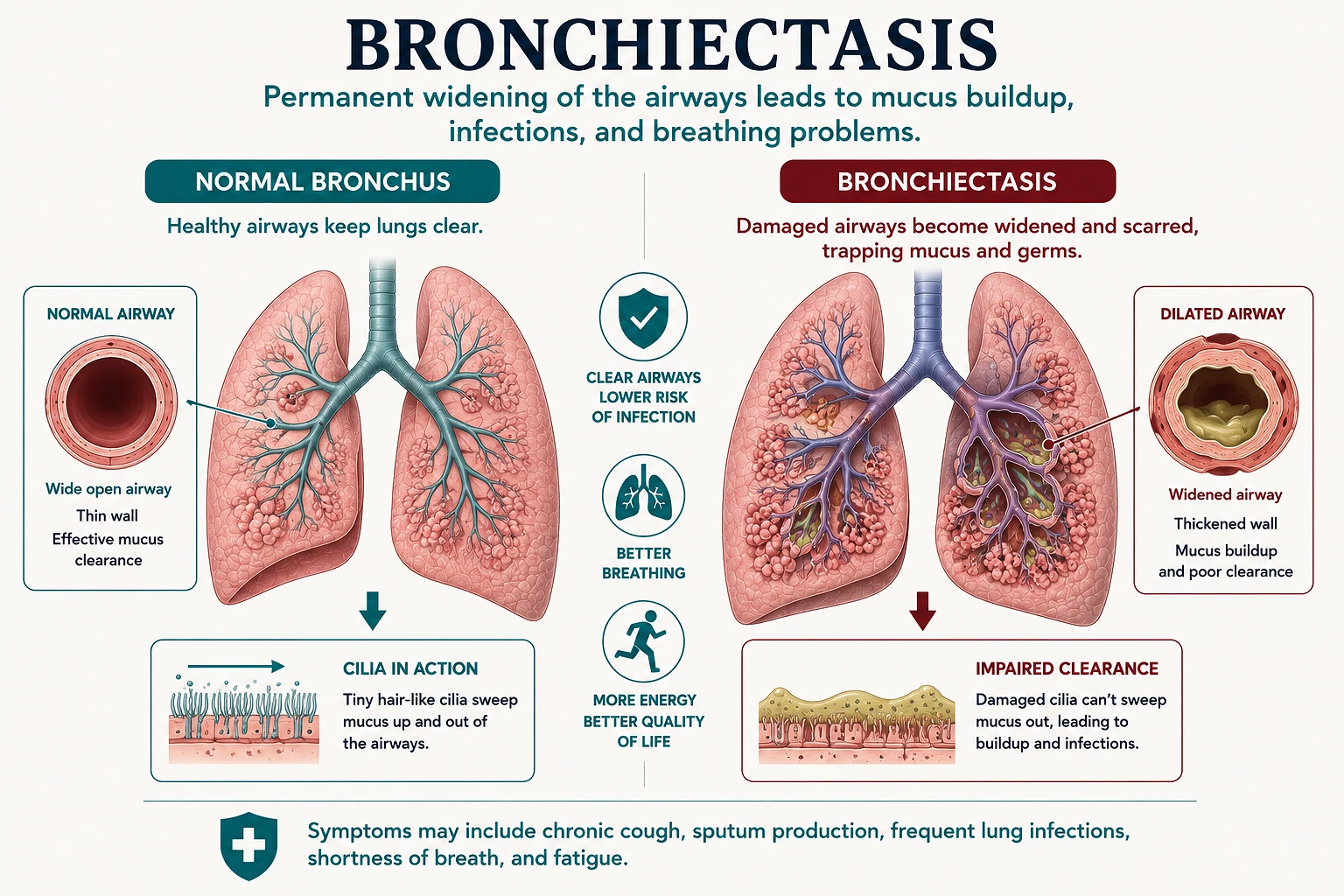
Bronchiectasis is a chronic lung condition in which the airways become permanently widened and damaged, leading to daily mucus buildup and recurrent respiratory infections.
In short
Bronchiectasis is a chronic lung condition in which the airways become permanently widened and damaged, so mucus pools instead of clearing normally and infections recur. It is diagnosed with high-resolution CT of the chest, followed by a workup to look for a treatable underlying cause. Treatment centers on daily airway clearance for most patients, with antibiotics reserved for exacerbations and, for a specific subset with frequent flare-ups, a longer-term suppressive strategy.
Bronchiectasis at a Glance
What Happens
The airway walls become permanently widened, thickened, and scarred, so mucus pools instead of being cleared normally, creating a self-reinforcing cycle of infection and inflammation.
Common Symptoms
A chronic, often daily productive cough is the hallmark, along with recurrent respiratory infections, fatigue, shortness of breath, and sometimes coughing up blood.
How It's Diagnosed
High-resolution CT of the chest confirms the diagnosis; a standard chest X-ray is not sensitive enough. Evaluation typically continues with pulmonary function testing and a workup for a treatable underlying cause.
How It's Treated
Daily airway clearance is the foundation of management for most patients, with antibiotics used for exacerbations and, for a selected subset with frequent flare-ups, a longer-term suppressive strategy.
Key Takeaways
- Bronchiectasis is permanent widening and damage of the airways that impairs the lungs' ability to clear mucus normally.
- The hallmark pattern is a daily productive cough with sputum, punctuated by recurrent respiratory infections.
- High-resolution CT, not a standard chest X-ray, is required to diagnose and characterize bronchiectasis.
- A cause-finding workup is standard practice, since identifying a treatable underlying condition can change management.
- Treatment is individualized: daily airway clearance is central for most patients, while long-term antibiotics are reserved for a specific subset with frequent exacerbations.
What Causes Bronchiectasis?
Prior Respiratory Infections
Severe infections such as pneumonia, whooping cough, or tuberculosis can leave lasting airway damage even after the infection itself resolves.
Immune Deficiencies
Certain immune deficiencies reduce the body's ability to fight off respiratory infections, allowing airway damage to accumulate over time.
Cystic Fibrosis & Genetic Conditions
Cystic fibrosis and other non-CF genetic conditions affect mucus consistency and clearance, predisposing the airways to bronchiectasis.
Connective Tissue & Autoimmune Disease
Connective tissue and autoimmune diseases can involve the airways as part of a broader inflammatory process.
Cilia Dysfunction
Problems with the cilia that normally sweep mucus out of the airway impair clearance and contribute to airway damage.
Idiopathic (Unknown Cause)
In some people, a reasonable evaluation never identifies a specific cause. Management still proceeds based on symptom pattern, exacerbation frequency, and airway findings.
Why Bronchiectasis Matters
Progressive Airway Damage
Without ongoing management, the cycle of mucus pooling, infection, and inflammation tends to make bronchiectasis progressively worse over time.
Recurrent Respiratory Infections
Impaired mucus clearance leaves airways prone to repeated infections, which in turn cause further airway damage, reinforcing the same cycle.
Exacerbations
Acute flare-ups marked by increased cough, sputum volume, and sometimes fever, usually driven by a shift in the airway's bacterial burden and treated with antibiotics.
Hemoptysis
Chronically inflamed airways develop fragile blood vessels that can bleed, ranging from streaking in the sputum to more significant bleeding.
Fatigue & Reduced Exercise Tolerance
Ongoing airway inflammation and infection commonly contribute to fatigue and shortness of breath with exertion.
When Should I Talk to a Pulmonary Specialist?
- Chronic productive cough lasting several weeks or longer
- Recurrent respiratory infections or pneumonia
- Any episode of coughing up blood (hemoptysis)
- Worsening symptoms despite treatment for another suspected airway condition
- A diagnosis of bronchiectasis without a clear underlying cause identified
Understanding the airway changes in bronchiectasis
Bronchiectasis develops when the walls of one or more airways in the lungs become permanently widened, thickened, and scarred, so mucus stops moving out of the lungs the way it should.
How Mucus Clearance Normally Breaks Down
Healthy airways rely on a coordinated system of mucus and tiny hair-like structures called cilia to sweep debris, bacteria, and secretions up and out of the lungs. When the airway wall is damaged, this clearance system stops working effectively, and mucus begins to pool in the widened, floppy segments of airway instead of moving out normally.
The Vicious Cycle of Bronchiectasis
That pooled mucus creates an ideal environment for bacteria to grow, which triggers infection and ongoing inflammation. The inflammation, in turn, damages the airway wall further, causing it to widen even more and lose more of its clearance function. This self-reinforcing pattern, often called the vicious cycle of bronchiectasis, is central to why the condition tends to be progressive without ongoing management. Interrupting it, primarily through routine mucus clearance and prompt treatment of infections, is the core goal of long-term care.
Recognizing the symptoms
The most consistent symptom of bronchiectasis is a chronic cough that produces sputum, often daily and sometimes in a substantial volume that people notice specifically. Because a productive chronic cough is frequently the symptom that first brings someone to medical attention, it’s worth taking seriously when it persists for weeks rather than resolving the way a typical viral cough would.
Recurrent Infections
Result from impaired mucus clearance and further worsen the underlying airway damage, reinforcing the same cycle.
Fatigue & Shortness of Breath
Common alongside the daily cough, particularly with exertion.
Wheezing
Intermittent wheezing can occur alongside the other daily symptoms.
Hemoptysis, or coughing up blood, is a recognized symptom that happens because chronically inflamed, damaged airways develop fragile blood vessels prone to bleeding. It can range from occasional streaking in the sputum to more significant bleeding, and while it does not always signal an emergency, it should never be dismissed as a minor nuisance; any new or worsening hemoptysis is a clear reason to seek evaluation.
How bronchiectasis is diagnosed
Diagnosis rests on high-resolution CT (HRCT) imaging, and it doesn’t stop there: because bronchiectasis can result from many different underlying processes (see Causes above), a genuine cause-finding workup is standard practice, since certain identifiable causes are themselves treatable in ways that change the overall management strategy.
The Diagnostic and Cause-Finding Pathway
- 01Clinical SuspicionA chronic productive cough, recurrent respiratory infections, or hemoptysis prompts evaluation for bronchiectasis.
- 02HRCT Chest ImagingHigh-resolution CT confirms the diagnosis, showing widened, thick-walled airways. A standard chest X-ray is not sensitive enough and can look normal even when bronchiectasis is present.
- 03Pulmonary Function & Sputum TestingPulmonary function testing assesses how well the lungs are moving air, while sputum testing identifies the bacteria present in the airways.
- 04Etiologic WorkupBlood tests for immune function and connective tissue disease, and sometimes genetic testing, look for a treatable underlying cause.
- 05Individualized Management PlanTreatment is built around any identified cause, symptom pattern, and exacerbation frequency, rather than a single protocol. If no cause is found despite a reasonable evaluation, the term idiopathic bronchiectasis is used.
The pulmonary function testing above also determines whether an obstructive pattern is present, information that feeds into the individualized management plan alongside the workup findings.
Airway clearance: the foundation of ongoing management
Because impaired mucus clearance sits at the center of the vicious cycle described earlier, helping the airways clear mucus more effectively is one of the most consistently important parts of long-term bronchiectasis management (see Treatment Options below). A pulmonologist or respiratory therapist helps match the right technique or device to symptom severity, sputum volume, and lifestyle, typically as a daily habit rather than something used only during flare-ups. For a closer look at specific techniques and devices, see our guide to airway clearance for bronchiectasis.
Sputum cultures and monitoring
Sputum cultures play a practical role in bronchiectasis care. During an exacerbation, culturing sputum helps identify which bacteria are present so antibiotic treatment can be targeted appropriately rather than chosen empirically. Periodic sputum testing, even when someone feels stable, also helps detect certain persistent or resistant organisms, such as Pseudomonas aeruginosa, whose presence can influence longer-term treatment decisions and monitoring frequency.
Understanding exacerbations
An exacerbation is an acute worsening of bronchiectasis symptoms (see Health Effects above), usually driven by a shift in the airway’s bacterial burden. Recognizing the pattern of one’s own exacerbations, including typical triggers and warning signs, is a practical part of self-management that many patients develop over time in partnership with their care team.
Antibiotics: an individualized decision, not a universal default
Antibiotic use in bronchiectasis is often misunderstood as an automatic, lifelong requirement, but that is not accurate. Antibiotics serve two distinct roles in this condition, summarized below, and the two should not be conflated.
Short-Course vs. Long-Term Suppressive Antibiotics
| Dimension | Short-Course Antibiotics | Long-Term Suppressive Antibiotics |
|---|---|---|
| Purpose | Treat an acute exacerbation | Reduce the frequency of exacerbations |
| Who It May Fit | Anyone experiencing an exacerbation | A specific subset with frequent exacerbations despite good airway clearance |
| Duration | A short, defined course, similar to other respiratory infections | A longer-term, lower-dose regimen |
| Decision Basis | Guided by prior sputum culture results when available | Sputum culture results, exacerbation history, and antibiotic resistance risk, weighed by a pulmonologist |
| Is It the Default? | Yes, standard for treating a flare-up | No, a selective decision, not automatic for everyone diagnosed |
Many people with mild or well-controlled disease manage their condition through consistent airway clearance and prompt treatment of exacerbations, without ever needing a chronic antibiotic regimen. Anyone with questions about whether a suppressive strategy applies to their situation should discuss it directly with a pulmonologist, since the decision depends heavily on individual disease pattern.
Associated conditions worth knowing about
Bronchiectasis can occur alongside, or be driven by, the underlying causes described above, particularly immune deficiencies, connective tissue and autoimmune diseases, and prior tuberculosis or other severe respiratory infections. When it coexists with one of these conditions, coordinated management between pulmonology and the relevant specialist is often needed, since treating the associated condition can influence how the airway disease behaves over time.
When specialist evaluation matters
Beyond the triggers above, a pulmonologist can confirm the diagnosis with appropriate imaging, guide the cause-finding workup, and build a management plan tailored to exacerbation frequency and severity rather than a one-size-fits-all protocol.
For patients in the North Dallas–Fort Worth area, the pulmonology team at VitalAir Sleep & Lung Center in Frisco, Texas evaluates chronic cough, recurrent infections, and confirmed or suspected bronchiectasis, helping coordinate imaging, cause-finding testing, and an individualized long-term airway clearance and treatment plan.
Patient Questions
What exactly is bronchiectasis?
Bronchiectasis is a chronic condition in which one or more airways in the lungs become permanently widened, thickened, and scarred. This structural damage impairs the airway's normal ability to move mucus upward and out, so mucus tends to pool. That pooled mucus becomes a breeding ground for bacteria, which triggers infection and inflammation that damages the airway wall further, causing more dilation. This self-perpetuating cycle is often referred to as the vicious cycle of bronchiectasis.
What are the main symptoms of bronchiectasis?
The most common symptom is a chronic, typically daily cough that produces sputum, sometimes in substantial volume. Many people also notice recurrent chest infections, fatigue, shortness of breath with exertion, and occasionally wheezing. Coughing up blood, known as hemoptysis, can occur and ranges from small streaks in the sputum to more significant bleeding.
Is coughing up blood always a sign of bronchiectasis getting worse?
Not necessarily, but it should never be ignored. Hemoptysis happens because the abnormal, inflamed airways in bronchiectasis develop fragile blood vessels that can bleed. It can occur even when a person otherwise feels stable. Any new or worsening hemoptysis warrants prompt evaluation by a pulmonologist to assess severity and rule out other causes.
How is bronchiectasis diagnosed?
Diagnosis relies on high-resolution CT (HRCT) imaging of the chest, which can clearly show the widened, thick-walled airways characteristic of the disease. A standard chest X-ray is not sensitive enough to reliably detect bronchiectasis and can appear normal even when the condition is present. Once bronchiectasis is confirmed on imaging, clinicians typically pursue additional testing, including pulmonary function testing and lab work, to evaluate lung function and look for an underlying cause.
What causes bronchiectasis?
Bronchiectasis has many possible causes. Prior severe respiratory infections, such as pneumonia, whooping cough, or tuberculosis, are common triggers of airway damage. Other contributors include certain immune deficiencies that reduce the body's ability to fight infection, cystic fibrosis and other non-CF genetic conditions affecting mucus clearance, connective tissue and autoimmune diseases, and problems with cilia function. In some people, a specific cause is never identified, which is called idiopathic bronchiectasis.
Why does my doctor want to run tests to find the cause if the CT scan already confirmed bronchiectasis?
Confirming bronchiectasis on imaging tells your clinician what the airways look like, but not why the damage happened. An etiologic workup, which may include blood tests for immune function and connective tissue disease, sputum testing, and sometimes genetic testing, is standard practice because certain underlying causes are treatable in ways that change the overall management plan. Finding a specific cause can meaningfully shift the treatment strategy, even though it is not always identifiable.
Will I need to be on antibiotics forever if I have bronchiectasis?
No, not automatically. Antibiotics are used in bronchiectasis in different ways depending on the situation. Short courses are commonly prescribed to treat acute exacerbations, which are flare-ups marked by increased cough, sputum volume, or a change in sputum color. Separately, a subset of patients who experience frequent exacerbations may be considered for a longer-term, lower-dose suppressive antibiotic strategy, but this is a selective decision made by a pulmonologist based on exacerbation frequency, sputum culture results, and individual risk factors. It is not a default requirement for everyone diagnosed with bronchiectasis, and many people with mild or stable disease are never placed on chronic antibiotics.
What is airway clearance, and why is it so important?
Airway clearance refers to techniques and devices that help loosen and move mucus out of the airways more effectively than coughing alone. Because impaired mucus clearance is at the core of bronchiectasis, regular airway clearance is one of the most consistent, evidence-supported parts of long-term management for most patients. A pulmonologist or respiratory therapist can help match a specific technique or device to an individual's needs and daily routine.
Why do sputum cultures matter in bronchiectasis?
Sputum cultures identify which bacteria are present in the airways, which is especially useful during an exacerbation to guide antibiotic selection or to detect certain persistent or resistant organisms, such as Pseudomonas aeruginosa, that can influence long-term management decisions. Periodic sputum testing, even when a person feels well, helps track the airway microbiology over time.
When should I see a pulmonologist for bronchiectasis-related symptoms?
It's reasonable to seek pulmonology evaluation for a chronic productive cough lasting several weeks or longer, recurrent respiratory infections, any episode of coughing up blood, or symptoms that are worsening despite treatment. A pulmonologist can confirm the diagnosis with imaging, pursue a cause-finding workup, and build an individualized management plan.
Sources
Guidelines and Professional Societies
- American College of Chest Physicians. Management of Adult Bronchiectasis: A CHEST Clinical Practice Guideline. 2026.
- European Respiratory Society. Clinical Practice Guideline for the Management of Adult Bronchiectasis. Eur Respir J. 2025.
- American Thoracic Society. Non-Cystic Fibrosis Bronchiectasis: Diagnosis and Management. Am J Respir Crit Care Med.