Pulmonary Medicine
Medically reviewed by Varun Halani, MD · August 12, 2026
Pulmonary Hypertension
A condition in which blood pressure is abnormally elevated specifically in the pulmonary arteries, the vessels carrying blood from the heart to the lungs, distinct from ordinary systemic high blood pressure.
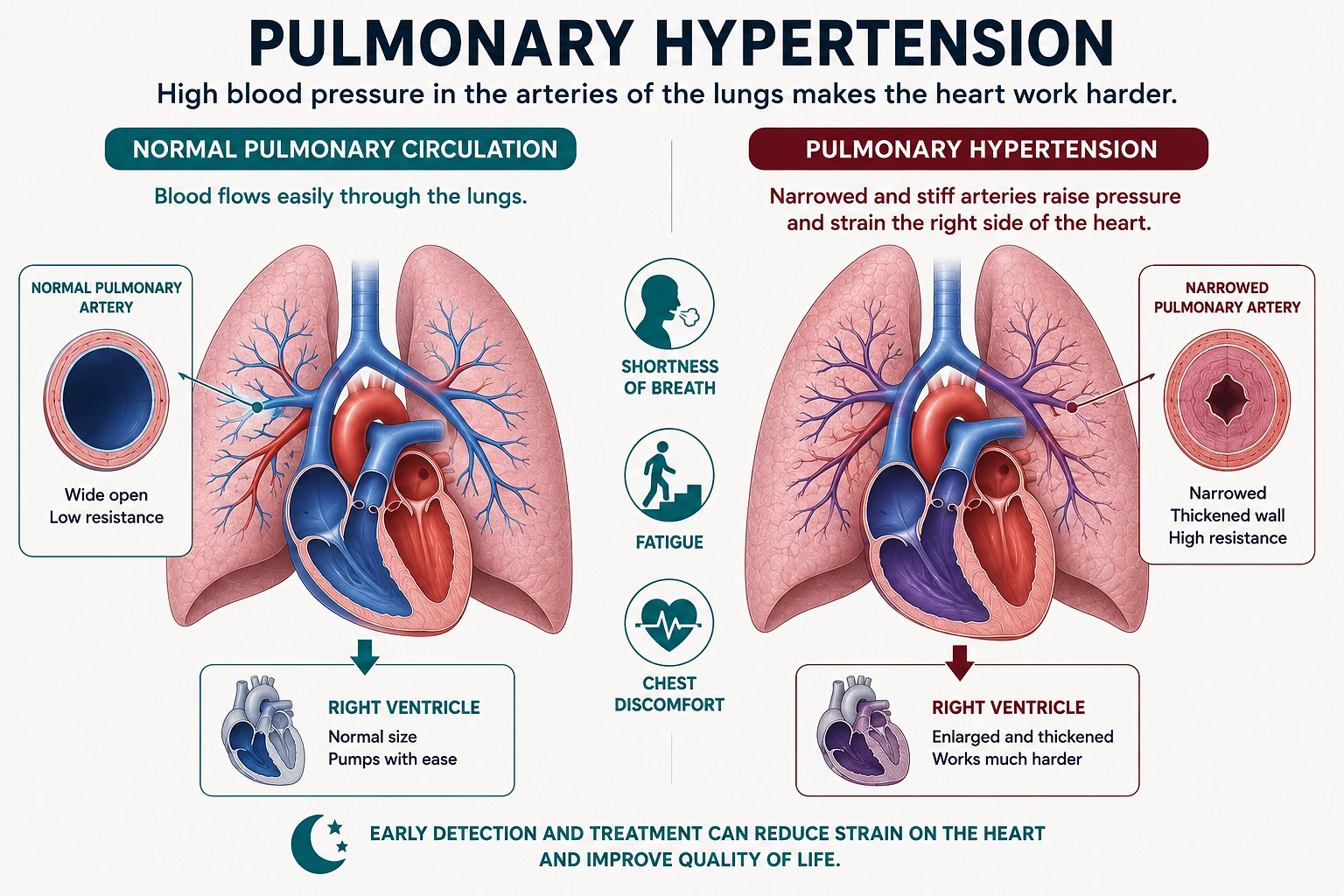
In short
Pulmonary hypertension (PH) is elevated blood pressure specifically in the pulmonary arteries, the vessels that carry blood from the heart to the lungs. It is not the same thing as ordinary high blood pressure, and it is a broad category with several different underlying causes rather than a single disease. Only a subset of pulmonary hypertension is pulmonary arterial hypertension (PAH), which has its own distinct treatment approach.
Pulmonary Hypertension at a Glance
What It Is
Elevated blood pressure specifically in the pulmonary arteries, the vessels carrying blood from the heart to the lungs, distinct from ordinary systemic high blood pressure.
Not the Same as PAH
Pulmonary arterial hypertension (PAH) is one specific, less common category of pulmonary hypertension, not another name for the whole category.
How It's Confirmed
Echocardiography is a screening tool; right-heart catheterization is the direct-pressure-measurement test that confirms the diagnosis.
Why the Cause Matters
Underlying cause, whether related to heart disease, lung disease, blood clots, or the pulmonary arteries themselves, largely determines the treatment approach.
Key Takeaways
- Pulmonary hypertension means elevated pressure in the pulmonary arteries, not the systemic arteries measured by a routine blood pressure cuff.
- Pulmonary hypertension is not one disease. It is a broad category with several different underlying causes, and the cause matters a great deal for how it is evaluated and treated.
- Not all pulmonary hypertension is pulmonary arterial hypertension (PAH). PAH is one specific, less common category within the broader PH umbrella, treated very differently from other forms.
- Echocardiography is usually the first screening test, but it estimates pulmonary pressures rather than measuring them directly. Right-heart catheterization is the reference-standard test that confirms the diagnosis.
- Pulmonary hypertension is frequently secondary to another condition, such as chronic lung disease, left-heart disease, or blood clots, rather than arising on its own.
- There is no single 'pulmonary hypertension treatment.' Management depends entirely on identifying the underlying cause and is best guided by a specialist familiar with that specific type.
Symptoms
Common Symptoms
- Shortness of breath, especially with exertion
- Fatigue
- Swelling in the legs or ankles
- Chest discomfort or tightness
- Palpitations, a sense of a fast or irregular heartbeat
Signs of More Advanced Disease
- Lightheadedness or dizziness with activity
- Fainting (syncope) with exertion
- Bluish discoloration of the lips or fingertips
- Marked reduction in activity tolerance over time
Common Questions When Pulmonary Hypertension Is Suspected
Is pulmonary hypertension the same as regular high blood pressure?
No. Pulmonary hypertension refers specifically to elevated pressure in the pulmonary arteries, the vessels carrying blood from the heart to the lungs. It is measured and diagnosed differently than the systemic blood pressure checked with a standard arm cuff, and a person can have one without the other.
If an echocardiogram looks concerning, does that confirm pulmonary hypertension?
Not by itself. Echocardiography is a useful and common first screening test that can estimate pulmonary pressures, but it is an estimation tool, not a definitive diagnosis. Right-heart catheterization, which directly measures pressures inside the heart and pulmonary arteries, is the reference-standard test used to confirm the diagnosis.
Does it matter which category of pulmonary hypertension I have?
Yes. Pulmonary hypertension is a broad category that can result from several different underlying processes, and the cause matters a great deal for how it is evaluated and treated. Two people with a similar degree of elevated pulmonary pressure on testing can need very different treatment plans depending on which category applies.
Broad Categories of Underlying Cause
Left-Heart-Related
Pulmonary pressures rise as a downstream effect of conditions affecting the left side of the heart, such as heart failure or valve disease, which is among the most common overall reasons for elevated pulmonary pressures.
Chronic Lung Disease or Low Oxygen
Long-standing lung conditions such as COPD or interstitial lung disease, or conditions causing chronic low blood oxygen, can lead to elevated pulmonary artery pressure over time.
Blood Clots (Chronic Thromboembolic Disease)
Pulmonary hypertension can develop when blood clots in the lung arteries do not fully resolve and instead scar and narrow the vessels over time.
Pulmonary Arterial Hypertension (PAH)
A less common category in which the small pulmonary arteries themselves become narrowed, thickened, or stiff. This category has its own distinct, specialized treatments not used for other forms of PH.
Other or Multifactorial Causes
Some cases involve multiple contributing factors at once, or causes that don't fit neatly into a single category, which is part of why a thorough evaluation matters.
Risk Factors
- Existing heart failure or significant left-heart valve disease
- Chronic lung disease, such as COPD or interstitial lung disease
- A prior blood clot in the lungs (pulmonary embolism)Particularly if breathlessness persists or worsens after the clot has otherwise been treated
- Connective tissue disease, such as scleroderma
- A family history of pulmonary arterial hypertensionRelevant mainly to the less common PAH category
Why Pulmonary Hypertension Matters
Right Heart Strain
Sustained elevated pressure in the pulmonary arteries forces the heart's right side to work harder over time, which can affect its function if the underlying cause isn't identified and addressed.
Exercise Tolerance
Reduced ability to exert without becoming breathless or fatigued, often narrowing daily activity gradually.
Fluid Retention
Swelling in the legs or ankles can develop as right-heart function is affected.
Quality of Life
Persistent fatigue and breathlessness can meaningfully affect daily function and are worth raising directly with a care team.
When Should I Talk to a Pulmonary Specialist?
- Unexplained shortness of breath, especially if it is progressive
- Shortness of breath combined with leg swelling, palpitations, or unusual fatigue
- A known predisposing condition, such as chronic lung disease, sleep apnea, connective tissue disease, or a prior blood clot in the lungs
- A family history of pulmonary arterial hypertension
- Lightheadedness or fainting with exertion
What Is Pulmonary Hypertension?
Elevated Pressure in a Specific Circuit
Pulmonary hypertension (PH) means abnormally elevated blood pressure in the pulmonary arteries, the vessels carrying blood from the right side of the heart to the lungs. This differs from the ordinary high blood pressure measured with an arm cuff, which reflects pressure in the systemic arteries supplying the rest of the body. A person can have normal systemic blood pressure and still have pulmonary hypertension, and the reverse is also possible.
Why the Right Heart Feels It
Blood returning from the body enters the right side of the heart, which normally pumps it through the pulmonary arteries into the lungs, to pick up oxygen, against relatively low pressure in this circuit. When pulmonary artery pressure rises and stays elevated, the right side of the heart has to work harder to push blood through, which is the underlying reason pulmonary hypertension can, over time, affect heart function and overall health.
Why Symptoms Are Often Missed
The most common symptom, shortness of breath, along with fatigue and swelling, is not unique to pulmonary hypertension and overlaps considerably with many other heart and lung conditions. That overlap is part of why pulmonary hypertension can go unrecognized for a while, particularly when breathlessness develops gradually and gets attributed to being out of shape or simply getting older.
Pulmonary Hypertension Has Several Underlying Categories
Why the Category Matters
Pulmonary hypertension is a broad descriptive category, elevated pressure in the pulmonary arteries, that can result from several genuinely different underlying processes. Two people with a similar degree of elevated pulmonary pressure on testing can need very different treatment plans depending on which category applies.
PAH Is One Category, Not a Synonym
PAH involves narrowing, thickening, or stiffening of the small pulmonary arteries themselves, rather than pressure elevation that develops as a downstream consequence of another condition. Because it has its own distinct, specialized medications, a patient whose elevated pressure comes from left-heart disease, for example, is treated by optimizing that heart condition, not with PAH-specific medication.
How Pulmonary Hypertension Is Diagnosed
Evaluation for suspected pulmonary hypertension typically follows a set sequence, moving from a screening test toward a definitive, invasive measurement and then toward identifying the underlying cause.
The Diagnostic Pathway
- 01Symptoms or Clinical SuspicionUnexplained or progressive shortness of breath, often combined with fatigue, leg swelling, or palpitations, prompts a clinical evaluation.
- 02EchocardiographyAn ultrasound of the heart, usually the first screening test. It can estimate pulmonary artery pressure and identify signs of right-heart strain, but it is an estimation and screening tool, not a definitive diagnostic test.
- 03Right-Heart CatheterizationA thin catheter is guided into the right side of the heart and pulmonary arteries to measure pressures directly, rather than estimating them indirectly. This is the reference-standard test that confirms the diagnosis and helps clarify its severity.
- 04Testing to Identify the CausePulmonary function testing, CT imaging of the chest, and sometimes a ventilation/perfusion (V/Q) scan help identify chronic lung disease or evaluate for unresolved blood clots.
- 05Category-Specific TreatmentThese tests, considered together with the history and right-heart catheterization findings, place a person’s pulmonary hypertension into the category that best explains it and guides treatment.
Pulmonary function testing is among the tests most often used to help assess whether an underlying lung condition is contributing.
Underlying Heart and Lung Disease
Pulmonary hypertension is frequently secondary to another, already-present condition rather than arising as a stand-alone disease, most often chronic lung disease such as COPD or interstitial lung disease, or a left-heart condition such as heart failure or valve disease.
Left-Heart Conditions
Heart failure and certain valve diseases are among the most common overall causes of pulmonary hypertension, since problems on the left side of the heart can back up pressure into the pulmonary circulation.
Chronic Lung Disease or Low Oxygen
Long-standing low blood oxygen levels and changes in the lungs' small blood vessels over time are common contributors to elevated pulmonary artery pressure.
When pulmonary hypertension develops alongside one of these conditions, treatment generally centers on optimizing management of that underlying condition rather than using therapies developed specifically for PAH.
Sleep-Disordered Breathing as a Contributing Factor
Untreated sleep apnea and chronic low oxygen levels during sleep can contribute to, or worsen, pulmonary hypertension in some patients. This is best understood as a contributing factor for certain individuals rather than a universal or standalone cause. When sleep-disordered breathing is identified alongside pulmonary hypertension, evaluating and treating it can be a relevant part of the overall management plan.
Matching Treatment to the Underlying Cause
Because pulmonary hypertension can arise from such different underlying processes, the right approach for one category can be ineffective, or simply not applicable, for another, as the treatment approaches below reflect. Care from a specialist familiar with the specific type involved is an important part of getting that approach right.
When to Talk to a Doctor
Unexplained or progressive shortness of breath is worth raising with a physician, especially alongside other symptoms noted above or a known predisposing condition such as chronic lung disease, sleep apnea, connective tissue disease, a prior blood clot in the lungs, or a family history of pulmonary arterial hypertension.
VitalAir Sleep & Lung Center, based in Frisco, Texas and serving patients across the North Dallas-Fort Worth area, evaluates patients with symptoms or risk factors suggestive of pulmonary hypertension, coordinating the testing needed to clarify whether it’s present and identify its underlying cause. If you have unexplained or worsening shortness of breath, a conversation with a physician is a reasonable next step.
Patient Questions
What is pulmonary hypertension, exactly?
Pulmonary hypertension is a condition in which blood pressure is abnormally elevated specifically in the pulmonary arteries, the blood vessels that carry blood from the right side of the heart to the lungs to pick up oxygen. This is different from the systemic blood pressure measured with a standard arm cuff, which reflects pressure in the arteries supplying the rest of the body.
Is pulmonary hypertension the same thing as pulmonary arterial hypertension (PAH)?
No, and this distinction matters a great deal. Pulmonary hypertension (PH) is a broad category that includes several different underlying causes. Pulmonary arterial hypertension (PAH) is one specific, less common category within that broader group, involving narrowing or stiffening of the small pulmonary arteries themselves. PAH has its own distinct, specialized medications that are not appropriate treatment for most other forms of pulmonary hypertension. Using the terms interchangeably can lead to confusion about diagnosis and treatment.
What causes pulmonary hypertension?
Pulmonary hypertension has several different underlying categories of cause. It is frequently related to left-heart conditions such as heart failure or valve disease, to chronic lung disease such as COPD or interstitial lung disease, to chronic low blood oxygen, or to blood clots in the lung arteries that don't fully resolve. A smaller, distinct category, pulmonary arterial hypertension, involves the small pulmonary arteries directly. Identifying which category applies is central to figuring out the right treatment approach.
What are the common symptoms of pulmonary hypertension?
The most common symptom is shortness of breath, particularly with exertion, along with fatigue, swelling in the legs or ankles, chest discomfort, and palpitations. In more advanced cases, lightheadedness or fainting with activity can occur. These symptoms overlap with many other conditions, which is part of why pulmonary hypertension can be under-recognized.
How is pulmonary hypertension diagnosed?
Evaluation typically starts with a history and physical exam, followed by echocardiography, which can estimate pulmonary artery pressure and suggest that pulmonary hypertension may be present. Right-heart catheterization, a more invasive procedure that directly measures pressures inside the heart and pulmonary arteries, is the reference-standard test used to confirm the diagnosis. Pulmonary function testing and imaging, such as CT scanning or a ventilation/perfusion (V/Q) scan, are often used to help identify an underlying cause, such as chronic lung disease or blood clots.
Is an echocardiogram enough to diagnose pulmonary hypertension?
No. Echocardiography is usually the first screening test and is genuinely useful for raising suspicion of elevated pulmonary pressures, but it is an estimation tool rather than a definitive diagnostic test. A formal diagnosis of pulmonary hypertension requires right-heart catheterization, which measures pressures directly rather than estimating them indirectly.
What is right-heart catheterization, and why is it needed?
Right-heart catheterization is a procedure in which a thin catheter is guided into the right side of the heart and pulmonary arteries to measure pressures directly. Because echocardiography only estimates pulmonary pressures, right-heart catheterization is considered the reference-standard confirmatory test for pulmonary hypertension and also helps clarify its severity and, in some cases, its underlying category.
How does pulmonary hypertension relate to COPD or interstitial lung disease?
Chronic lung diseases such as COPD and interstitial lung disease are common underlying contributors to pulmonary hypertension, often related to long-standing low blood oxygen levels and changes in the lung's blood vessels. When pulmonary hypertension develops in this setting, managing the underlying lung disease is typically a central part of the treatment approach, rather than using PAH-specific therapies.
Can sleep apnea cause pulmonary hypertension?
Untreated sleep apnea and chronic low oxygen during sleep can contribute to, or worsen, pulmonary hypertension in some patients, though it is best understood as a contributing factor rather than a universal or sole cause. Evaluating and treating sleep-disordered breathing can be a relevant part of the overall management plan when it's identified as a contributor.
Is pulmonary hypertension curable?
It depends on the underlying cause. Some forms, such as pulmonary hypertension related to blood clots, may be substantially improved or resolved with targeted treatment. Others, including those related to chronic lung disease, left-heart disease, or PAH, are generally managed as ongoing conditions rather than cured outright, though treatment can meaningfully improve symptoms and, for some patients, slow progression. There is no single answer that applies to everyone, which is part of why identifying the specific cause matters so much.
Is pulmonary hypertension life-threatening?
It can be, particularly if it goes unrecognized and untreated, since sustained elevated pressure can strain the right side of the heart over time. The seriousness and expected course vary considerably depending on the underlying cause and how early it's identified, which is why unexplained or progressive shortness of breath deserves timely evaluation rather than being dismissed.
What kind of specialist manages pulmonary hypertension?
Management typically involves a pulmonologist and often a cardiologist, since the condition sits at the intersection of lung and heart health. For certain categories, particularly PAH or chronic thromboembolic disease, referral to a specialist or center with specific experience in that category is often appropriate, since treatment approaches are quite specialized.
Sources
Guidelines and Professional Societies
- American Thoracic Society and European Respiratory Society joint clinical statement addressing the classification, evaluation, and management of pulmonary hypertension.
- European Society of Cardiology and European Respiratory Society joint clinical practice guideline on the diagnosis and treatment of pulmonary hypertension, describing the current WHO group classification framework and the role of right-heart catheterization as the reference-standard diagnostic test.
- American College of Chest Physicians (CHEST). Clinical and patient education resources addressing pulmonary hypertension and pulmonary vascular disease.
Government and Regulatory Sources
- National Heart, Lung, and Blood Institute. Patient and public education overview of pulmonary hypertension, its causes, and its treatment.